The Testimony of Kenneth Andrew Burns.
My Journey to Faith, and the Continuing Christian Voyage.
It is said that every journey starts with a step. My initial step, or steps to faith, were thoughts while working. I am an artist, mostly a landscape painter, as such I gain my inspiration from the beautiful and wonderful landscape of the world. This is God’s awesome creation. For as long as I care to remember, those thoughts were of all the delights that I was blessed enough to sense, marvel at, and enjoy. Inevitably I would consider my place and role in all of this wonder of creation. Working by myself, the special thoughts developed into a special conversation, indeed a direct communication with God.
Certainly, for about four or five years, probably much longer, I have been thinking gently of theology and the meaning of life.
In the summer of 2019, the happy flow of my life got interrupted and I was reminded, first, of my own mortality, in the shape of a cancer scare which for a few months caused some worry. Then no sooner was I given good news about my own health, than we faced one of the bleakest possible… My dear mother was told she had an advanced cancer, for which there was no treatment, her illness was terminal. The consultants could not specify exactly how long she might have. In early November 2019, I became her primary carer. In the last eleven months of her illness I became increasingly aware of the essential and vital aspects of our very being. Love, dignity and respect punctuated every moment, and every moment was precious. I had assumed a very special and greatly privileged role which I was delighted and honoured to be able to do. When the pandemic and lock-down came, we were very much on our own. My little teaching job, in the local college, had come to an end. This in itself was a blessing as it afforded me the opportunity to dedicate my time solely to her care. We got an enriched insightfulness of each other… Then with all the worries, personal sadness, loss and global events, I found it necessary to call upon God’s help, to process my thoughts and feelings. My earlier informal direct communication, which I had felt very natural, was developing more like prayer which I now felt gave great comfort.
My dear mother and I shared quality time and I listened and learned so much. I realised that she was indeed a person of faith herself and I would find notes referring and quoting from scripture wherever she had been, in the house. After 2nd September 2020, when she finally retreated to her bed¬room, her power of speech became continually weaker, and these notes took on a special meaning. She would write them and leave them in books, bibles and drawers. One read “there is nothing without the Lord”. I continue to find these notes, poignant reminders of her wisdom, love and guidance. She sadly passed away on 6th October 2020.
In an awful instant my whole life had changed, I felt an overwhelming sadness, I was grief stricken and there was now an empty void…how does one attempt to fill such a void left by a loved one?! There was also the end of my special role as her primary carer. I had become sensitised to her needs both day and night. I still listened out for her in the echoes of the silence. I could not sleep. Then one morning, as I looked through one of her beautiful little note books, I found one of her most profound notes, a reiteration of something she had said to me a couple of months prior. It read, “K, please don’t cry for me too long, when I am gone. Get on with all the good things you planned, do not waste a moment and be the happy person I always knew you to be.”
I have always been a social person who loves being with people, and I am very fortunate to have many good friends and family, who were most supportive and helpful when my dear mother passed away. One very dear friend was Jann Skelly, who I had known from school days. We were reacquainted after I returned to Stornoway in 2017. We became very good friends and Jann was most supportive, inviting me to go along to the Stornoway High Church of Scotland. When my dear mother passed away, Jann, thoughtfully suggested I contact the minister, Rev. Gordon MacLeod, to conduct the funeral. I did this and the beautiful and sensitive words he wove into the service were a great comfort to our family. Our dear mother’s funeral was simply beautiful. It was a graveside service, subject to the restrictions during lockdown. I was most impressed with Gordon’s attention to detail. In the absence of church musical accompaniment, he read out the words of her favourite hymns. Especially appropriate was the passage he chose, Proverbs 31:10-31 Epilogue: The Wife of Noble Character. He also, kindly, recorded the service as I requested, which means I can listen to it again at any time.
I continued an email correspondence with Gordon thanking him for the lovely service he conducted for my dear mother. I was delighted with his reply and invitation to come along to church with Jann when a semblance of stability returned, after lockdown restrictions were lifted. As soon as I could, I began to attend church and took great comfort in the words and songs of the service. I loved the morning services when the light shone through the windows and the place was filled with bright light. Often the words seemed to contain a poignancy and resonated for me, then I would be overwhelmed by the experience and often sat in gentle floods of uncontrolled tears.
As time gradually went by, I happily found myself attending more. I loved the great kindness and inclusiveness of the other people in the Stornoway High Church and the hand of fellowship was always welcoming.
One evening while walking with Jann, she invited me to help with something that I had never heard of before. Messy Church is an outreach initiative that primarily involves families through gospel and scripture, combined with art and craft ideas. I was intrigued by the concept of a messy church, as I did not associate the mess of art and craft with the peace and order of a church. I was delighted to become involved. Soon finding that it was an excellent means of engaging parents and their children in a creative way, in the framework of gospel and scripture.
I found myself becoming more involved and feeling more included. I was even invited to speak at a couple of family Sunday services. Explaining my involvement with Messy Church and its importance as an outreach aspect of the mission of the church. My personal and professional experience made it an understandable interest.
A less understandable subject for me to speak with any authority on came one Thursday evening. Gordon contacted me and asked if I had heard of an idea, that he was reading about, namely that of “the three miles per hour God.” He wanted me to consider what it meant and convey this in the service the following Sunday. I gave it some thought and met with him at the church on the Saturday, to discuss ideas. I gave it very careful thought and had an idea about it referring to God being unrushed and well-paced, in His approach to all things. Gordon said this was on the right lines. Not to worry about the words used as God would give me the words on the day. The Sunday morning arrived, and I had given it even more thought. I walked along to church, in the rain, hoping to avoid getting too wet. When my shoulder brushed against a beautiful privet hedge, that had very recently been trimmed and so the rain released its sweet fragrance into all my senses. Rather than being vexed, by getting wet in the rain. I slowed my pace and was instantly made aware of the wonder of “the three miles per hour God.” I then related the idea, in the service, to the congregation.
Over the months that passed I began to find peace and comfort in the sermons I attended, particularly the ones in the morning light. I listened as time and life presented further challenges of faith. Sadly, my life was filled with overwhelming emotions and grief with the loss of people who were very close to me. The summer and autumn of 2022 were particularly poignant. Then in the evening of the 11th November 2022, I suffered a TIA, Transient Ischaemic Attack… My good friends near me, I was given a lift to the A&E, and there given a full check-up. Several hours later I gently walked home. All the time I was conversing, privately, with God, though I did not regard this as formal prayer. I would say I was at once taking my life more seriously and simply overflowing with full gratitude and awareness of God’s gift and blessing of life. My emotions were running high and I could not sleep.
Between February and May 2023, I was delighted to join with some of the congregation of the Stornoway High Church in the most informative Alpha Course, devised by Nicky Gumble. I really benefited tremendously from attending and learnt the vital importance of direct prayer, the personal communication with God. I came to realise that my idea of informal talking with God, which I seem to have done all my life, does have a place and the communication of prayer can have many forms and variations. One is never lonely in prayer, and I am always grateful for the strength of fellowship and shared experience. In the Alpha Course I also learnt of the power of the Holy Spirit.
Throughout 2023, I was getting on with my life and looking to my future. I had planned an exhibition for the following May.
Then completely without warning on the 15th January 2024, just after preparing for a forth coming Messy Church. During a normal conversation with my friend Guido Blokland, I collapsed in my dining room with what was described as a Neurological Seizure. I surely gave Guido a very nasty shock, I lost consciousness and memory for a time, which scared me very much. I was taken to hospital in an ambulance and kept in for observation. While in hospital, I received many kind messages and prayers from my friends and Gordon kindly visited. I was simply overwhelmed by all the support shown to me. I had no idea what had happened, but decided that I would recapture 2024, and make it positive.
On 9th February 2024, a very dark wintry morning. I was getting concerned that time was progressing very fast and I had yet to begin any work for the exhibition, I had planned in the Comunn Eachraidh Nis, The Ness Historical Society, for the month of May. I was thinking that I did not even know the exhibition space and expressing my worry to my friend Guido, when he gave me a very wise reply and said I could make a positive beginning that very day by visiting. I could take the bus that left at 12.30 and return on the one that passed Comunn Eachraidh Nis at 4pm, and have enough time to do all that I needed, and have lunch there. Upon arriving at Comunn Eachraidh Nis, I was instantly inspired by the bright beauty of the space and kindness of the people there. I took some photographs of the space and made a floor plan. I came home full of ideas. I was delighted to have made a conscious start at my exhibition, and was ready to think of a title.
Sometimes the words and actions of others are all that we need to see a way ahead. Guido was just the calm influence that I required and I thought that the calm approach would be a good strategy to prepare and complete the exhibition. Remembering the lesson of the three mile per hour God, I resolved to enjoy the work without any panic. I felt very happy indeed.
The preparatory service on Friday 17th February 2024, of the communion weekend, at the Stornoway High Church of Scotland was led by the Rev Hector Morrison. I was very interested to hear his own memory of his conversion to Christianity, as a young student and his personal description of the simplicity of the event. I enjoyed his sermon, and the fellowship and testimony that followed.
Sunday 19th February 2024, was to be a very special day for me. It was a bright morning and I took my seat, soon after I settled, I was gently approached by elder Duncan MacInnes. He invited me to meet with him in the vestry after the service and before going for tea. There he kindly enquired as to why I had not yet gone forward, and he wished to tell me that he knew exactly how I was feeling. He proceeded to outline and mirror my exact thoughts and feelings at that moment, as if he could read my very thoughts. He reassured me that my reservations and sense of not having enough knowledge of scripture were normal and common place. He told me I had nothing to fear and if I did wish to go forward, he could inform the minister and the other elders. I could then come back before the evening service to go forward. At that moment I felt a great sense of warmth and joy. I went for my cup of tea filled with excitement. I wanted to call out loud! I went home, to collect the little light blue Christening New Testament, given to me by my god mother, my dear auntie Mary, on the day of my Christening in November 1961. The little Bible has been with me throughout my life and I wished to have it then, as I went forward to become a member of the Stornoway High Church of Scotland. Proclaiming my faith and belief in the Lord God and Saviour Jesus Christ, I was delighted and happy.
Over the next few days, I was very moved by the response of everyone I knew. Then on the 12th March, a day which would have been my parents wedding anniversary, I had been invited to present my testimony to the Scripture Union of the Lews Castle College Stornoway. I felt confident to do this.
On 10th April 2024, I had to go to Glasgow for an MRI scan. This meant a very quick trip and flight to Glasgow. I stayed with my sister-in-law, Susan, who was so kind and hospitable to me. Even taking the day off work to accompany me to the hospital. I was also delighted to able to see my nephews and niece. The result of the scan was positive – nothing untoward was detected.
After the briefest time away, I returned and happily resumed my painting in preparation for my exhibition. I had thought long and hard about an appropriate theme and title. It had to be something that I readily identified with and I wanted it to reflect my heritage. I called my exhibition “Àitichean”, the Gaelic for “Places”. I completed sixteen paintings of various sizes, inspired by my most favourite landscape locations and I was delighted to have thoroughly enjoyed the experience. Certainly, my calm approach and quiet use of prayer had been very positive!
On Friday 3rd May 2024, a lovely sunny day, I opened my exhibition, “Àitichean”. In the beautiful bright gallery space at Comunn Eachraidh Nis. I had invited my good friend architect Campbell MacKenzie to contribute some of his amazing drawings. That afternoon the many friends that I had invited to the opening launch filled the space and it was a most enjoyable and successful event. That afternoon, I also had some sales success, selling nine of the total eleven paintings that sold.
I have been invited to present my testimony to the congregation of the Stornoway High Church of Scotland on 6th October 2024, the fourth anniversary of my mother’s passing. She had been an inspiration to me throughout my life, both spiritually and artistically.
Kenneth A Burns
3rd September 2024
Tuesday, 3 September 2024
Thursday, 14 December 2023
Getting To Know My Way Around My New Urban Environment.
Now, contrary to all popular belief art students actually work extremly hard. Every place at Glasgow School of Art is hard earned. It was highly competitive and there was an expectation of diligence and excellence from the lecturers and "The School Board". Just being there was exciting and dynamic, and we put in long hours.
By the end of November 1979, life as a Glasgow School of Art student was getting well established. A pattern emerging in each day, and every day was different and brought exciting new ideas and creative challenges. We hardly noticed the seasonal change until folk started to mention taking time off for the forth coming Christmas holiday! Though a trip home was obviously going to be good, this would mean an interruption to the activities in the city which I felt unsure of and did not welcome the prospect of any reduction in momentum! My first journey back to Stornoway, with all the poignancy of that voyage in the winter! Meanwhile back at art school, our group had just made our first visit to the amazing People's Palace in Glasgow Green, to source material for a design brief. I have always really enjoy social history and the very concept of a museum dedicated to ordinary people's history inspired me very much. Venturing to the other side of the city centre for that project, each morning for several weeks had happily expanded my understanding of much of Glasgow's history. In an short time I became a 'Friend of the People'.
At around this time, I also started certain lifestyle habbits which were to remain with me till the moment I moved away from dear old Glasgow. One was to use my Transcard for the trains, buses and underground. It was essential in order to get around and really get to know my new city. I would be heading of in any direction of exploration especially on a Saturday. The other was my self discipline of early rise and daily swim in my local swimming pool or baths, at North Woodside. Since we were small boys, swimming at any time of the day was a standard routine. No trip to the city was complete without a visit and session in a swimming pool. Our father had been a school boy champion at both swimming and diving and we were each taught to swim as soon as possible. I always felt more mobile and active in water especially in the sea! (Cold as that is). North Woodside Baths was a short brisk walk or run along Great Western Road. It was closed on Sundays, so often at 6.30am on a Monday morning the water temperature took a little longer to rise to a level which would be acceptable to ordinary customers. In those winter mornings in 1979 I joined the ranks of a very enthusiastic group of swimmers, and continued doing this for a number of years. North Woodside Baths and Washhouse in Moncrieff Street, (later Braid Square) had survived the red pen of condemnation of Comprehensive Redevelopment. This had seen a huge swathe of the northern inner central area of Glasgow cleared of old and poor standard housing since the early 1960s, to make way for the Inner Ring Road and new high rise housing. North Woodside was possibly the most interesting of the new areas still under construction when I first arrived and at the time the baths were looking rather lost externally and in need of tender care internally. 
Clearly classical Roman in style and still under a layer of soot, the building had not changed since it was built around 1880. It had originally served every bathing requirement for the people of the district, just like many other similar places did. The characteristic Victorian changinging cubiciles, that surrounded the swimming pool were to remain as a feature when the building was eventually refurbished and became a local sports hub, with the improved pool, gym and fitness suite. It is still in use and I pay a visit whenever I am in the neighbourhood.

I quickly got to know every aspect of this special neighbourhood, and soon made close friendships with my neighbours and many of the people I met as I went on my way back and fore from the Art School, the local streets and the city, the parrks and the riverside. I truly felt I was part of this lively community and wished to be so. Indeed twenty years later on my thirty-eighth birthday, 6th May 1979, I was elected to represent the local ward as Glasgow City Labour Party Councilor. This was another proud moment, for me, another new chapter of learning and development. I was delighted to have the opportunity to serve my home community for four wonderful years.
Wednesday, 29 November 2023
The Glasgow Tenement Was Indeed A Way of Life.
So in September 1979, just over forty-four years ago, aged eighteen, I began my new life as a student at the Glasgow School of Art. That alone would have been enough to fill me with a sense of achievement and the realisation of a special, personal dream. At the same time, I moved into a flat in an old tenement building, in the West End of Glasgow. For many reasons this was no ordinary situation. First of all, although I was successful in gaining a place of study at the GSA, I did not at that time have a place in any student residential accomodation. I was not awarded a place there until a few weeks after the term started, by which time alternative arrangements had been found. I learned that student accomodation was in short supply and there were, certainly at that time, a number of students who were actually homeless each year. Early in the summer holiday, my older brother and I searched in vain all over the city, to find a flat for ourselves and two friends. Our parents were both quite rightly very anxious about this situation and decided to make a positive intervention, by buying a flat that would adequately suit our requirements and a good bit more! Our father justified the expence by argueing that his business activities at that time were expanding thus requiring an increasing amount of time away from home and visiting the city. He was quite presuasive, although in reality he could not bare the idea of either of us being in the awful position of not pursuing a chosen career for want of a place to stay. But who would have thought that I would have stretched out that stay for such a long time, close on four decades from late teenage to late fifties. That old flat was to be my home and place of work for my whole time in Glasgow, it was a place of welcome to the various generations of family and friends. It therefore rang with the sound fun and laughter, and was filled with many happy memories. It is exactly seven years ago (today), on 29th November, that the old place was sold. The end of one era and beginning of another.
Many people unfamiliar to the concept of a "tenement" somehow imediately equate it as a by-word for "slum". Oh, how wrong they are! First of all, residential accomodation in condominiums or tenements have existed for a very long time. In fact the Romans were the first to develop such habitation as a practical form of construction for urban areas and the system was further developed throughout Europe from mediaeval times to the present in many variations. The feudal system of law and land division in Scotland was almost tailor made for the development of tenement flats, in buildings of more than one story. By the late 18th century there was also a comparatively limited development of terraced houses similar in form and style as those in the cities of England, this was particularly true, for example, in Edinburgh's New Town development. Glasgow went a different route and embraced the tenement form to cater for all sectors of its community. Those building and developing the city took tenement design and construction which was to become instantly recognisable as uniquely Glasgwegian. There was a huge variety and quality spread throughout the city. The tenement became the backdrop of the city, housing the majority of its people and reinforcing the strong character and identity of those citizens. Some of the tenement flats were well appointed and housed the wealthier residents, other tenement flats were badly appointed and housed poorer residents and many were mixed together. The architectural effect of lots of stone facaded streets, undulating up and down the city's drumlin topography, was a clearly defined urban grain. That was Glasgow's distinguising mark as truly fine European city, despite the soot stained stones caused by over a century of industrial and domestic chimney coal smoke. An architect friend of our family who had earlier shown me round the city contended a very good argument that the blackened buildings would have begun to get cleaner, after the Clean Air Act simply by the huge reduction in atmospheric polution. He believed sandblasting was an over-abrasive method of stone cleaning, which destoyed the top patina of the polished ashlar surface. Glasgow was a city built of a local, soft type of sandstone which had resulted in elaborately carved masonry and beautiful buildings. which created an outstanding nineteenth century set piece of urban architecture. No matter how it came to be, it was a remarkable place.
The tenement flat that my parents selected and bought was enormous, it was really a family sized home and effectively an extension to our home in Stornoway. I was fascinated by this old flat and began to study as much as possible about its history, design and layout. One the first Glasgow books I purchased was the definitive reference on social, historical and architectural housing in Glasgow, "The Tenement A Way of Life" by the late Frank Worsdall. This essential reading for anyone with an interest in this very specialised subject had then just recently been published. Our flat was what is known as a nine apartment on the second or top floor and attic, of a three story blond sandstone tenement building, constructed around 1841. It was spread over two floors, six rooms, kitchen and bathroom forming the top floor and three large rooms of varied sizes forming the attic. Three of the four rooms that looked over the tree lined street interconnected. The largest of these had been the original dining room, always the most formal and embellished of nineteenth century or Victorian public or entertaining rooms. This room had the customary black marble fireplace, with Doric ordered pillasters, the joinery was bold, there were high skirtings and broad Scottish Pine floor boards, with a dark stained border. A wire still protruded from the centre of the floor, a reminder of bell pull that was once located under the dining table to compliment the ones on each side of the fire. There were two cupboards or presses flanking the fireplace and walk-in cupboard or linen store on the wall opposite the windows. These twin windows, with their tall six-over-six, slim astricled case and sash functions, were fitted with folding shutters, all the wood was gesso primed and dark stained to represent mahogany. Apparently Victorians felt pine was rather vulgar for use in formal rooms and of course mahogany was much more expensive than desired for fixtures like shutters, which would also have been covered with layers of draped curtains. Crowning the room and surrounding the ceiling was a richly modelled classically detailed cornice and central ceiling rose. The free standing acanthus leaves and bud and dart in this multi layered cornice required twenty litres of paint for a single covering. The floor to ceiling height measured more than fourteen feet and the curtain drop was twelve feet. At the opposite end of the long hall or "lobby", was the other principle public room, the drawing room. Close to the eight foot tall front door. this room would have had similar decorative features to the wider and much grander dining room. However, some time after the Second World War, someone had a DIY fit and pulled off the bold joinery mouldings on the doors and shutters, in a desperate desire to flush every surface! Fortunately they could not reach the soffets above each of the twin windows in this room. I spent ages over the years trying source the right shape of mouldings. I decovered each had been originally cut to a subtly different gauge. Indicating that there may have been different individual joiners working together when the place was originally constructed. Sadly in the same fit of modernisation the corresponding white Carrara marble fire place had been taken out and an inappropriate clumsy tiled fire place set in to replace it. I wanted to replace that lump of a fire place the moment I saw it. My detective skills set about to source one for re-instating. I found two slendid contempary 1840s classic marble fireplaces, one white the other black. I bought them both from a dealer whose husband was a tutor at the Art School, I am sure she kindly gave me a good deal! I then offered the fine black one with it's free standing doric coloums, to my neighbour downstairs for her to install in the former dining room in the flat below. From the hall in our flat, a door opened on a tight helix stair leading to a bright and spacious attic. My father got the smallest of the three rooms converted into big square bathroom, flanked by two combed attic rooms the L-shaped one was a large bedroom, the other a light-filled studio. From the attic the sound of the clock in the University spire could be heard as it chimed the time each quarter of the hour. The original address of our flat was 2-Up, Number 2 Hillhead Place, on Bank Street, Burgh of Hillhead near Glasgow, Lanarkshire. Located on west side of Bank Street, in Hillhead near Great Western Road and Gibson Street, this was indeed the very hub of Glasgow's West End. It was a wonderful and integrated community with people of international backgrounds sharing a beautiful district, there to live, work and study. I had certainly found a multi-cultured place to call home and it was everything I had hoped it would be. A most suitable place for a young art student to call home.
 |
| Sitting room, former dining room |
 |
| Dining room, former parlour |
 |
| Hall |
Tuesday, 21 November 2023
A tale of two cities
Forty-four years ago this month, I was really getting settled in to my new life as a student at the wonderful Glasgow School of Art, and I loved every minute of it. Each day was busy and brought something new. Through the week I would welcome each day with an early start making my way into the first year department in Blythswood Square. Wednesday mornings were "Liberal Studies and The History of Art" lectures in the basement Lecture Theatre in the "Mack" (Charles Rennie Mackintosh's masterpiece of modern architecture and a creative fortress perched high above Sauchiehall Street, on Garnethill). As the weeks went by I stopped pinching myself as the reality became clear that I was indeed part of my long held dream of being an art student living in the urban world. But I also began to understand that it was not in my character to become anonymous and I quickly gave up trying. Each morning between 7.30am and 8.30am one would see the same group of people travelling in the same direction. A polite nod of acknowlegment then progressed into gentle conversation and fellow commuters became a community. The weekends brought the fun of finding a party, people would actually go round the streets of the West End of Glasgow, listening out for a good party. Most did just this and eventually found occasion to organise their own events in their own places. But in November 1979 I hadn't yet discovered my own talent for hosting what were later to be known as "Special Art School Parties", with good food, plenty of drink and often live music! The old flat that was to be my home throughout my time in Glasgow, did come into its own and was indeed a great place to entertain. It was certainly became a very happy residence and place of work for almost four decades.
In November 1979, my older brother Malcolm and I received an invitation to two parties in Edinburgh, to be held in the same weekend. We may call them "Stornoway Parties", organised by some of our good friends from home, then studying in the capital. This meant getting a train in the late afternoon on the Friday and making a whole weekend visit returning some time on the following Sunday afternoon.
We met up with our friends and went back to their flat where we would be staying. Then off we all went to the first party. Very soon after entering the party flat my brother, just disappeared! I spent some time searching for him, and asking if anyone had seen him, but no-one had. Not knowing what to do next, I decided to take my coat off and try to stop worrying. Everyone was leaving their coats and jackets in a bedroom at the back of the flat. I was just about to do the same when I noticed my brother lying face down, choking among the coats and jackets, in the throes of an asthmatic attack! I had to quickly help him get his inhaler and reach for some air. All the time playing down any anxiety I had about the potential seriousness of the event. Fortumately everything was fine and we were soon right back in party mode. But I learnt how easy things can go wrong!
The following day we met lots more people we knew, form Stornoway and in the evening attended another party. By Sunday morning we were all exhausted and quite "partied out". Later on the Sunday we were ready to head "home" to Glasgow. Of course being November it was dark and cold. We arrived back in Queen Street Station some time after 6pm. We climbed up to the Cathedral Street viaduct above the station and there waited for a bus to take us to the West End.
Standing at the bus stop beside us was a wee Glesga wuman. Her head was covered by a well pined woolly hat and she was wearing one of those heavy woven coats quintessentially Glaswegian, with three big buttons at the front. She also wore fur lined boots rolled down and carried a double loop handled shopping back. Now in Glasgow, my adopted city a place I love dearly, no matter where you go, there is always a person desperate to communicate and break through the barrier of loneliness. All the encouragement required is a fleeting eye contact and a conversation will begin. I blinked and the little woman smiled and said, "aye, that's me since yest'rday"... I didn't quite catch it so she said it again! I wondered what on earth it meant and if she had any more such expressive phrases. Within seconds I knew her name was Sadie and was being told her life's history, how she had been working since the day before and was now heading home. She had a family of nine and was very proud of them... The bus arrived we got on, Sadie sat beside me and her conversation continued. Now and then she invited information of me...Then we arrived at our stop in University Avenue, we said our cheerios and my brother and I got off, to walk the short distance "home". Not nearly as chatty as me, Malcolm asked "You never introduced me to your friend? How long have you known her?" I tried to explain, why I was so interested in this person whom I may never have met again and why I believed and still believe that it is so important to engage with and respect everyone we meet. That was after all a value expressed of our upbringing. Meeting a real person, with an interesting life for a few brief minutes brought a special warmth to a cold night and completed a lovely weekend. I never did see Sadie again.
Tuesday, 17 October 2023
Remembering my first actual class
I continue the journey that my memory has taken us on, right back to the autumn of 1979 and to the First Year Department. At the time, this was located in two former town houses, fronting to 6 and 7 Blythswood Square, and backing to Bath Street, with Bath Lane in between. The two Georgian double fronted houses of the 1820s were connected by bridges spanning the lane. This opened onto Blythswood Street which was once called Mains Street. The official entrance to our First Year Department was the door at 7 Blythswood Square. These buildings had once been the location of the West of Scotland Agricultural College, a fact that was proudly proclaimed in a tile and mosaic on the floor immediately inside the heavy front door.
The address was of historic interest as having been the home of James Smith, a wealthy architect, his wife, family and notorious daughter Miss Madeleine Smith. She became infamous for poisoning her lover with a huge amount of arsenic. Miss Smith thus scandalised the sensitivities of Glasgow society of the 1850's, with details of her clandestine love making and callousness, then walking away from a possible death sentence by a Not Proven verdict. The story is legendary and has been well recorded in many books, plays and films. The actual site of the crime where Madeleine administered the eighty-four grains of arsenic in cocoa to her Channel Island lover Pierre Emile L'Angelier had become one of the male toilets, in the basement with a window to Blythswood Street. Some tourists and sight-seers would wait patiently to be taken to see the location. But clearly the configuration of the building had greatly altered over the years.
I will always remember my first actual class at the First Year Department of the Glasgow School of Art. Our year was divided into six groups. My group started with a Three Dimensional study in spatial awareness. There were three areas of study, which covered every aspect aspect of art and design. Two Dimensional Work (which covered a huge brief focusing on Design and Composition in two dimensions) ; Three Dimensional Work (which focused on everything in the third dimension, including exploration of spatial awareness; and Drawing, which of course also covered painting. There was also "Liberal Studies", which covered the History of Art and the compulsory Life Drawing each evening of the week, except Friday. We were required to complete one area of study per term, which was continuously assessed, and at the end of the year we submitted work projects and folios which were formally marked. So early on that first day of actual work we were taken to a studio on the "ground floor level" of the Bath Street section overlooking Blythswood Street. The room was large and bright. There was a grid marked off on the floor and rising up the walls. Into and onto the grid were an assortment of items, placed haphazardly. Each student was then given the co-ordinate of a cubic measure of space in the grid and the study enquiry was to remake the shape of that cubic space using different materials, twice the size of the original! My cube was filled by a plastic sack of unfired chopped clay. I had to think of the true shape, construction, texture... Then I had to reconstruct it using prescribed materials, for example clay had to be replaced by balsa wood. It was certainly an interesting brain teaser to begin life as an art student.
The day ended in a top lit attic studio and here we all began our compulsory life drawing classes, which became a long term commitment for me, throughout art school.
Every Wednesday we had "Liberal Studies". Our tutors in the Blythswood building had a day off. One of my two personal tutors went every Wednesday morning to have her hair done at Gerralts, at Woodside Place, Charing Cross. There she had the front and top beautifully coiffured but the back was always ignored and seemed to be left as the tangled mass that it was. Meanwhile, we all reported to the main building, the world famous 167 Renfrew Street, Charles Rennie Mackintosh's outstanding masterpiece. As in the previous week we ascended the flight of steps and swung through the front doors, which I noticed were complimentarily hinged to allow an uninterrupted progress if carrying a port-folio or large painting. Every inch of this wonderful building was designed to be beautiful and functional, while always inspiring and encouraging to the creative people using it. This time it was the west wing we would be exploring. Our lectures were presented by different lecturers each with a specialist knowledge. We had already been to the Mackintosh Lecture Theatre, in the west basement and were to get to know the space very well.
I have always felt that I was initially attracted to Glasgow first by the wit and humour of its friendly people and then by the amazing architectural internal space that was The Glasgow School of Art Library. This space has always been regarded as the very pinnacle of Mackintosh's achievements. Its three tall oriel windows designed so cleverly as twenty-five foot hexagonal prisms that absorbed maximum daylight from the west and lit three levels of that magnificent interior: the library, the gallery and original book store. This had already become my most favourite space, and well before my arrival and enrollment, I had imagined myself there using it. When I surprised myself and became a student, I was a little disappointed not be able to visit whenever I wished. Access was actually by appointment and one was chaperoned there by a librarian. It was a special sanctuary, a peaceful place to think, reflect and be inspired. Located on the first floor, it closed the west corridor which linked it to the museum at the top of the central stair. The tall west corridors were each lit by three south facing windows, those on the first floor leading to the Library had alcove window seats, originally intended for tutorial purposes. Access around the building was excellent, with each level of both east and west wings being served by a seperate designated dog legged stair, functioning as a stair tower.
This inspiring building just sat so comfortably in that grid on the hills of Central Glasgow. Indeed what would the city be like without the Mackintosh School of Art? It has been perched up there on Garnethill for a creative century, looking like a Scottish medieval castle when viewed from below in Sauchiehall Street and a factory of inspiration when approached from up there in Renfrew Street. I live in the hope that it will rise from the ashes of the fires of 2014 and 2018. Much of the interior of the Library was recreated after the first fire by very talented and skilled crafts people. Some of it was not yet installed at the time of the 2018 fire, and it would be marvelous to see this work installed, in a rebuild. It was a great privilege to have been able to grow creatively there in the original and acquire magical memories which I now enjoy recalling.
Friday, 22 September 2023
More memories of first days at Glasgow School of Art
Well I am delighted that so many people enjoyed what I posted yesterday. Some really liked the journey my memory took us on, and even wished to carry on further. What was to become a daily ritual for those us after surviving that enrollment day. Climbing up those curved steps and then through the swing doors to be presented in a magical space of light and dark which was The Entrance Hall. As I explained in the earlier piece the stairwell beckoned one upwards, from here, to the light. The interior of this internationally renowned icon of modern architecture and design by Charles Rennie Mackintosh displays master strokes of his sheer genius. Just wandering around inspired ideas and creative thoughts.
Back in 1979 I was simply delighted to have got a place there. Indeed I was very pleased with myself, possibly too pleased and certainly in need of being brought back to earth. Actually being there at all was very special and a privilege. Thank you Ms Queenie Rowan for reminding me of my heritage and bringing me back albeit quivering...
Above in the top lit Museum space, roof lights set into the oak beams and trusses filled the place with autumnal morning brightness. Here I met my fellow students for the first time and made lasting friendships. We required to report to a studio in the "east wing corridor", I think it was the central one number thirty-nine. More ebonised oak swing doors, with feature stained glass and lead panels, to go through. This corridor was also lit from above with four distinctive ogee-shaped ceiling lights. Into the big studio dramatically illuminated by one of the huge north facade windows for the specific function of creating art, especially painting. The whole north side of the first floor was the home of the Drawing and Painting Department and at that time it was starting to expand and spread throughout the building. In time I would come to know the place very well, as I became a drawing and painting student for my three specialising years.
On that memorable day we were each given a list and a black bin liner full of the basic or essential kit of materials to begin work as a Glasgow School of Art student. That in itself was exciting and our account with the "School Shop" was then opened. I looked forward to visiting what turned out to be a characteristically eccentric emporium run by two colourful middle-aged wig wearing Jewish women, whom we all eventually got to know..
An eventful morning was brought to a close when someone made the welcome suggestion of going for lunch and we ended up down the hill in Sauchiehall Street. The world was then our oyster. It was almost too much to take in and each of us was rather thrilled.
The following day we required to report to The First Year Department, actually housed in two former town houses, fronting to 6 and 7 Blythswood Square, and backing to Bath Street. Here we were divided into six groups. The Fresh student whom I met on the stair the day before was in my group as was a familiar face from Lewis, my dear friend Maggie. I was in my element.
At about this time we were all invited to The Director's Welcome Address to the new intake of first year students. Back up Garnethill to the Mackintosh Building, 167 Renfrew Street. This time we descended the stair into the West basement corridor and to the Mackintosh Lecture Theatre for the first time. The seats here were uncomfortable by design, so no chance of nodding off at any stage. The desk or book rest behind was at the very height to cut right into one's back and the seat hard and uncompromising. At some point years later the seats were covered but it did little to make them any more comfortable.
The Director of Glasgow School of Art at this time was Sir Harry Barnes, he had been a well known and highly respected designer. I had heard about him before arriving as a student. Sir Harry Barnes, lived in large Victorian Gothic Mansion in the prestigious Whittingham Drive, in the West End, called "Dumpy Dykes", it overlooked Binghams Pond. I well remember his kind address and warm welcome to all of us. First of all his entrance was unusual, as he was carried from his wheelchair and lifted by two carers up onto one of the tree curved desks that stood on the platform or stage. Clearly a very ill and frail man. He gently expressed his good wishes and hoped we would enjoy our studies at such a wonderful place of creativity and every possible success in our future careers. Everyone was touched and most impressed by this great dignity. It actually turned out to be his last ever engagement as sadly he passed away very shortly after he spoke to us... I believe he had cancer of the spine. We were all very sad.
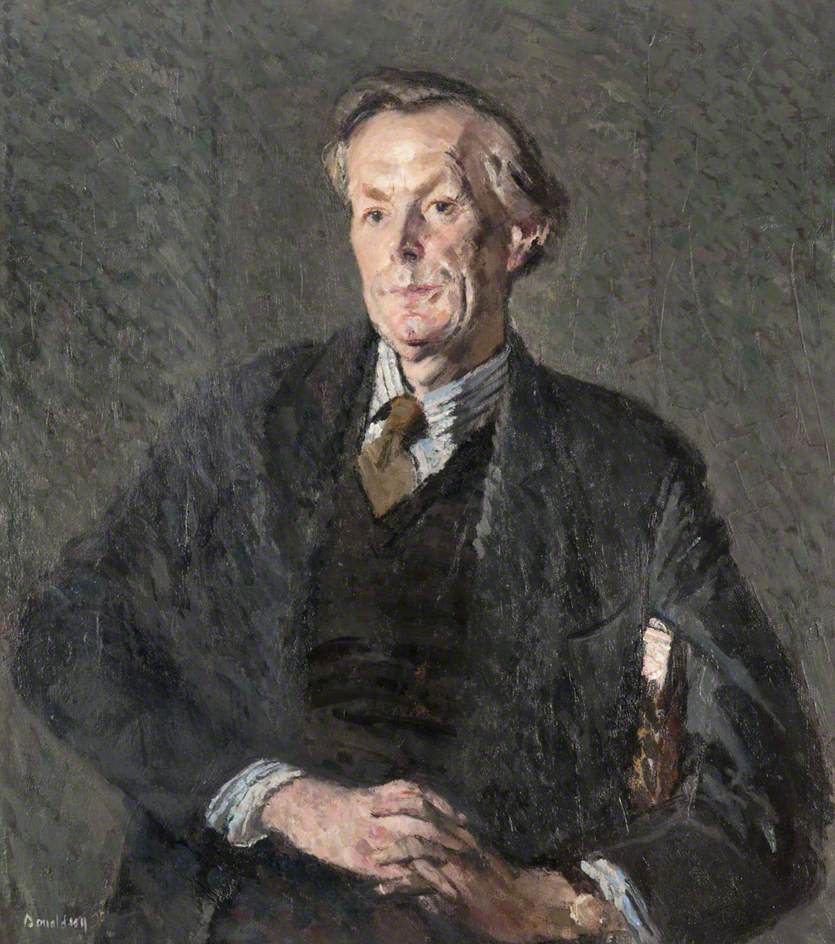
Sir Harry Jefferson Barnes, picture courtesy GSA
Above in the top lit Museum space, roof lights set into the oak beams and trusses filled the place with autumnal morning brightness. Here I met my fellow students for the first time and made lasting friendships. We required to report to a studio in the "east wing corridor", I think it was the central one number thirty-nine. More ebonised oak swing doors, with feature stained glass and lead panels, to go through. This corridor was also lit from above with four distinctive ogee-shaped ceiling lights. Into the big studio dramatically illuminated by one of the huge north facade windows for the specific function of creating art, especially painting. The whole north side of the first floor was the home of the Drawing and Painting Department and at that time it was starting to expand and spread throughout the building. In time I would come to know the place very well, as I became a drawing and painting student for my three specialising years.
On that memorable day we were each given a list and a black bin liner full of the basic or essential kit of materials to begin work as a Glasgow School of Art student. That in itself was exciting and our account with the "School Shop" was then opened. I looked forward to visiting what turned out to be a characteristically eccentric emporium run by two colourful middle-aged wig wearing Jewish women, whom we all eventually got to know..
An eventful morning was brought to a close when someone made the welcome suggestion of going for lunch and we ended up down the hill in Sauchiehall Street. The world was then our oyster. It was almost too much to take in and each of us was rather thrilled.
The following day we required to report to The First Year Department, actually housed in two former town houses, fronting to 6 and 7 Blythswood Square, and backing to Bath Street. Here we were divided into six groups. The Fresh student whom I met on the stair the day before was in my group as was a familiar face from Lewis, my dear friend Maggie. I was in my element.
At about this time we were all invited to The Director's Welcome Address to the new intake of first year students. Back up Garnethill to the Mackintosh Building, 167 Renfrew Street. This time we descended the stair into the West basement corridor and to the Mackintosh Lecture Theatre for the first time. The seats here were uncomfortable by design, so no chance of nodding off at any stage. The desk or book rest behind was at the very height to cut right into one's back and the seat hard and uncompromising. At some point years later the seats were covered but it did little to make them any more comfortable.
The Director of Glasgow School of Art at this time was Sir Harry Barnes, he had been a well known and highly respected designer. I had heard about him before arriving as a student. Sir Harry Barnes, lived in large Victorian Gothic Mansion in the prestigious Whittingham Drive, in the West End, called "Dumpy Dykes", it overlooked Binghams Pond. I well remember his kind address and warm welcome to all of us. First of all his entrance was unusual, as he was carried from his wheelchair and lifted by two carers up onto one of the tree curved desks that stood on the platform or stage. Clearly a very ill and frail man. He gently expressed his good wishes and hoped we would enjoy our studies at such a wonderful place of creativity and every possible success in our future careers. Everyone was touched and most impressed by this great dignity. It actually turned out to be his last ever engagement as sadly he passed away very shortly after he spoke to us... I believe he had cancer of the spine. We were all very sad.
Sir Harry Jefferson Barnes, picture courtesy GSA
Thursday, 21 September 2023
First Day at Art School
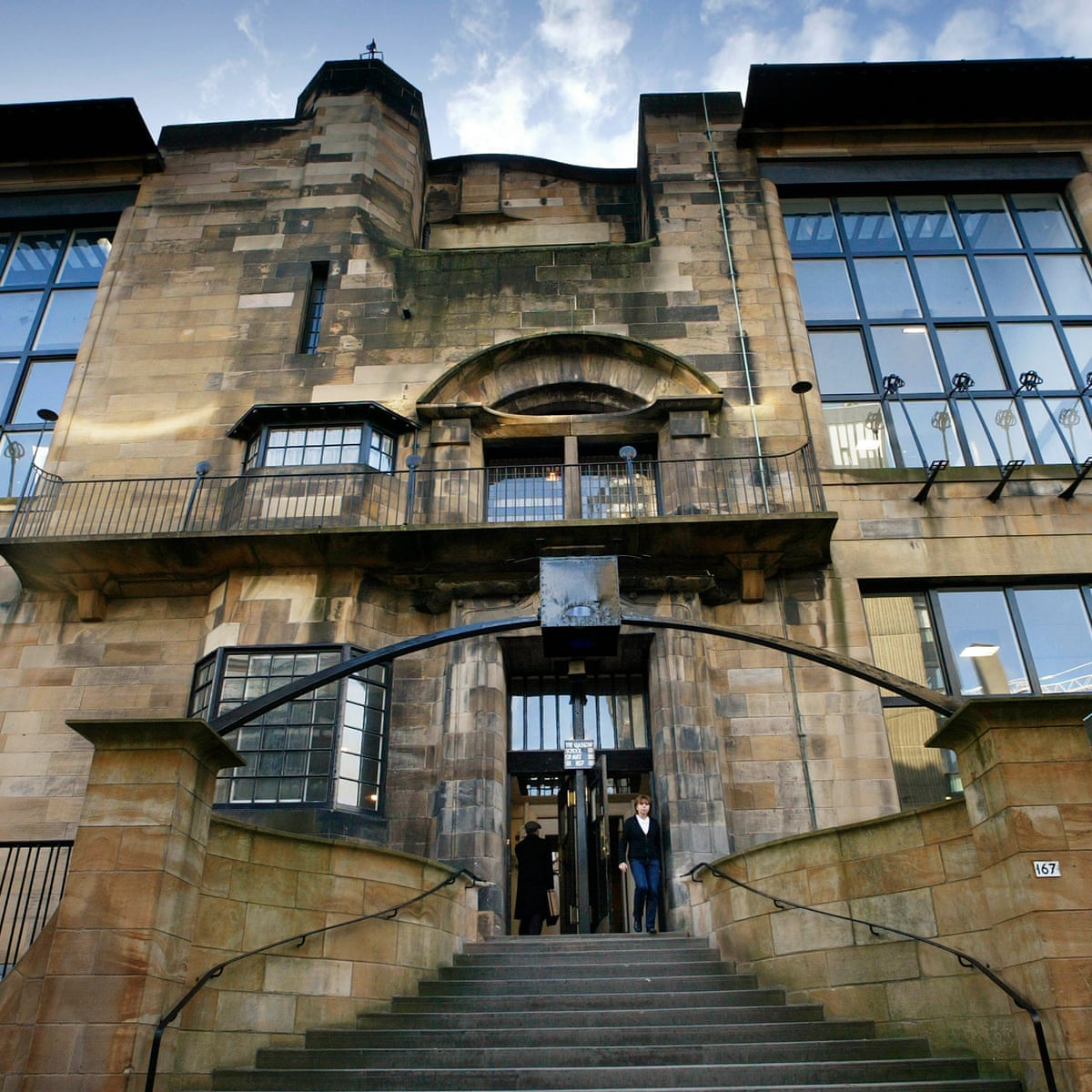 It is exactly forty-four years ago today, the 21st September 1979 that I enrolled in the Glasgow School of Art. Thus fulfilling a long held ambition. I was tingling with excitement, every few minutes pinching myself just to make sure it was a reality A few days before I had left Stornoway with my Dad, in a white transit van, the second or third such trip. In the previous weeks my parents accompanied me with that van full of my belongings, mostly the usual clothes, but vitally art history books, various drawing and painting materials, my old wooden desk and work table, which have remained with me all these years. These items were being moved to my new residence, a once grand Victorian tenement flat in the heart of the West End of Glasgow. My parents had bought the property the month before to ensure my older brother and I had adequate accommodation whilst we were students. We were finding it very difficult to find a place to stay and I was not actually allocated a room in the J D Kelly Hall until well after the term began. For a variety of reasons our family were also spending an increasing amount of time in the city and the old place would be very well used over the years (but that is another story, for another day).
 Back then all I wanted was to explore my urban being and find anonymity, far away from the curtain chinking of home. I was a proud teenager who did not want it known what I was doing however harmless and dull it really was. At that time I was far from sentimental for my true homeland and it would take a number of years to be overwhelmed by the pain of "cianalas", which I certainly came to know in later years. But still, on that departure I stood on deck watching our Island recede into the horizon.
So here I was on my way to a new life, the journey to Glasgow was not without incident. As we came down through the gorge at Glen Coe, my father very calmly told me "Kenneth, I don't wish to alarm you but my breaks aren't working properly, I'll pull over at the next garage, and get them attended to!...". Well that was not until we hit the urban world, somewhere on Great Western Road. He managed to control the speed with skilled use of gears and careful attention of all other road users. Such was my confidence in my Dad's driving, I really did not think anything of this situation, until many years later when I heard him tell of how he felt on that journey. Of course he never let on how scared he actually was at the time. True to his form he found the garage he had in his mind and clearly knew them, or used his incredible charm to get help. He needed the van to collect a few things over the next few days before heading home.
I seem to remember my older brother was at the flat to welcome us and we went out for a meal. Over the next few days I enjoyed finding my way around and getting my bearings, it did not take long for me to feel very much part of my new surroundings.
I was up and out bright and early on the morning of the 21st September, so excited as not to miss a single detail. I reached 167 Renfrew Street, and ascended the iconic curving steps to the famous swing doors in the portal. Then I entered through the small vestibule, into the vaulted entrance hall. Though painted in off white hues the hall is dark but the beautiful light streaming down the the stairwell certainly entices visitors further into this building of art, design and creativity. I now find it impossible to believe that all this has been destroyed by fire twice. At the foot of the stair the janitor's box seemed the centre of all proceedings and knowledge and I was directed to the right-hand door, on the half landing, The Registrar's Secretary and Assistant, one Queenie Rowan's Office. This room was a hive of industry, as ALL the first year students arrived at an allotted time, that day, to enrol and matriculate. It was also buzzing with a flock of women each in awe of Ms Rowan, their reverence and near fear of the grand lady was contagious and filled the room. I wanted to get in and out as quickly as possible, so when the lady herself called my name all I wanted to do was be swallowed by the floor and disappear. What on earth had I done to be thus summoned? In her refined West of Scotland accented she announced, "Mr Burns, I wish say to you, please never lose your fine Hebridean accent, it is a special attribute and qualification that will serve you well throughout your life," Then she smiled at me and finished by saying. "That was all I wanted you to know". With that I left her office and continued up to the first floor space known as the Museum. To get photographed and receive a matriculation card, produced by a new technique - called lamination. My card had a blue spot with a figure 7%. Later when I asked what it meant I was told that this referred to the fact that I was what they then called a "Seven percent-er", indicating that I was one of only 7% of GSA students who gained entry there without the minimum qualifications or on the strength of their portfolios.
I had spent the summer cultivating some facial hair, which possibly made me look older. Though I hoped more sophisticated! As I wandered around a fellow first day, first year student, thinking I was a tutor stopped me to ask ..."I wonder if you tell me, Sir, where do I go now?...To which I had to own up to being in the same position, merely a fresh student. We laughed and became good friends.
This was the beginning of a wonderful and creative journey. Over the next four decades I met many people and made lasting friendships. Charles Rennie Mackintosh's masterpiece, the building we came to know and love as "The Mack", became my alma mater. I discovered a new detail every day I spent there. It now live on in our memories.
Subscribe to:
Posts (Atom)