Thursday, 14 December 2023

Getting To Know My Way Around My New Urban Environment.

Now, contrary to all popular belief art students actually work extremly hard. Every place at Glasgow School of Art is hard earned. It was highly competitive and there was an expectation of diligence and excellence from the lecturers and "The School Board". Just being there was exciting and dynamic, and we put in long hours. 

By the end of November 1979, life as a Glasgow School of Art student was getting well established. A pattern emerging in each day, and every day was different and brought exciting new ideas and creative challenges. We hardly noticed the seasonal change until folk started to mention taking time off for the forth coming Christmas holiday! Though a trip home was obviously going to be good, this would mean an interruption to the activities in the city which I felt unsure of and did not welcome the prospect of any reduction in momentum!  My first journey back to Stornoway, with all the poignancy of that voyage in the winter! Meanwhile back at art school, our group had just made our first visit to the amazing People's Palace in Glasgow Green, to source material for a design brief. I have always really enjoy social history and the very concept of a museum dedicated to ordinary people's history inspired me very much. Venturing to the other side of the city centre for that project, each morning for several weeks had happily expanded my understanding of much of Glasgow's history. In an short time I became a 'Friend of the People'.

At around this time, I also started certain lifestyle habbits which were to remain with me till the moment I moved away from dear old Glasgow. One was to use my Transcard for the trains, buses and underground. It was essential in order to get around and really get to know my new city. I would be heading of in any direction of exploration especially on a Saturday. The other was my self discipline of early rise and daily swim in my local swimming pool or baths, at North Woodside. Since we were small boys, swimming at any time of the day was a standard routine. No trip to the city was complete without a visit and session in a swimming pool. Our father had been a school boy champion at both swimming and diving and we were each taught to swim as soon as possible. I always felt more mobile and active in water especially in the sea! (Cold as that is). North Woodside Baths was a short brisk walk or run along Great Western Road. It was closed on Sundays, so often at 6.30am on a Monday morning the water temperature took a little longer to rise to a level which would be acceptable to ordinary customers. In those winter mornings in 1979 I joined the ranks of a very enthusiastic group of swimmers, and continued doing this for a number of years. North Woodside Baths and Washhouse in Moncrieff Street, (later Braid Square) had survived the red pen of condemnation of Comprehensive Redevelopment. This had seen a huge swathe of the northern inner central area of Glasgow cleared of old and poor standard housing since the early 1960s, to make way for the Inner Ring Road and new high rise housing. North Woodside was possibly the most interesting of the new areas still under construction when I first arrived and at the time the baths were looking rather lost externally and in need of tender care internally.

Clearly classical Roman in style and still under a layer of soot, the building had not changed since it was built around 1880. It had originally served every bathing requirement for the people of the district, just like many other similar places did. The characteristic Victorian changinging cubiciles, that surrounded the swimming pool were to remain as a feature when the building was eventually refurbished and became a local sports hub, with the improved pool, gym and fitness suite. It is still in use and I pay a visit whenever I am in the neighbourhood.

Closer to our flat in Bank Street was Cooper's and Company's headquaters and one time main shop. We caught it's final couple of years, after it became Cooper's Finefare. With its eccentric building and clock tower punctuating the local skyline and dominating the junction of Great Western Road, this was where we did our weekly shop. We also had two "Dairies" directly across the street, to the right or south towards Gibson Street, The Star Dairy, and to the left or north towards Great Western Road, The Neelam Dairy. We tended to go to the Neelam and soon got to know the Bakshi family who owned it. Many a Morton's morning roll we bought there, and lots besides. The dairy was the true corner shop open early and still open late. As the name indicates they also sold milk, butter and eggs, so there was no excuse to run out of anything. The urban life was everything I had hoped it would be! Cooper's had been an upmarket grocer in its day. A huge commercial space with a tall ornate interior and large gold letters on a lamp-blacked facia on the exterior. The company name was also embedded in the pavement and curb stones, in case your attention were to stray from which establishment you happened to be passing. Inside it was still old fashioned despite an attempt to update. Above head height remained the wires for the cash and receipt tubes, such a feature of old shops. At the door were bicycles with baskets for making home deliveries. We did not use that service, as we were only a few yards away along the street, and it would have been rather a cheek

I quickly got to know every aspect of this special neighbourhood, and soon made close friendships with my neighbours and many of the people I met as I went on my way back and fore from the Art School, the local streets and the city, the parrks and the riverside. I truly felt I was part of this lively community and wished to be so. Indeed twenty years later on my thirty-eighth birthday, 6th May 1979, I was elected to represent the local ward as Glasgow City Labour Party Councilor. This was another proud moment, for me, another new chapter of learning and development. I was delighted to have the opportunity to serve my home community for four wonderful years. 

Wednesday, 29 November 2023

The Glasgow Tenement Was Indeed A Way of Life.

So in September 1979, just over forty-four years ago, aged eighteen, I began my new life as a student at the Glasgow School of Art. That alone would have been enough to fill me with a sense of achievement and the realisation of a special, personal dream. At the same time, I moved into a flat in an old tenement building, in the West End of Glasgow. For many reasons this was no ordinary situation. First of all, although I was successful in gaining a place of study at the GSA, I did not at that time have a place in any student residential accomodation. I was not awarded a place there until a few weeks after the term started, by which time alternative arrangements had been found. I learned that student accomodation was in short supply and there were, certainly at that time, a number of students who were actually homeless each year. Early in the summer holiday, my older brother and I searched in vain all over the city, to find a flat for ourselves and two friends. Our parents were both quite rightly very anxious about this situation and decided to make a positive intervention, by buying a flat that would adequately suit our requirements and a good bit more! Our father justified the expence by argueing that his business activities at that time were expanding thus requiring an increasing amount of time away from home and visiting the city. He was quite presuasive, although in reality he could not bare the idea of either of us being in the awful position of not pursuing a chosen career for want of a place to stay. But who would have thought that I would have stretched out that stay for such a long time, close on four decades from late teenage to late fifties. That old flat was to be my home and place of work for my whole time in Glasgow, it was a place of welcome to the various generations of family and friends. It therefore rang with the sound fun and laughter, and was filled with many happy memories. It is exactly seven years ago (today), on 29th November, that the old place was sold. The end of one era and beginning of another.

Many people unfamiliar to the concept of a "tenement" somehow imediately equate it as a by-word for "slum". Oh, how wrong they are! First of all, residential accomodation in condominiums or tenements have existed for a very long time. In fact the Romans were the first to develop such habitation as a practical form of construction for urban areas and the system was further developed throughout Europe from mediaeval times to the present in many variations. The feudal system of law and land division in Scotland was almost tailor made for the development of tenement flats, in buildings of more than one story. By the late 18th century there was also a comparatively limited development of terraced houses similar in form and style as those in the cities of England, this was particularly true, for example, in Edinburgh's New Town development. Glasgow went a different route and embraced the tenement form to cater for all sectors of its community. Those building and developing the city took tenement design and construction which was to become instantly recognisable as uniquely Glasgwegian. There was a huge variety and quality spread throughout the city. The tenement became the backdrop of the city, housing the majority of its people and reinforcing the strong character and identity of those citizens. Some of the tenement flats were well appointed and housed the wealthier residents, other tenement flats were badly appointed and housed poorer residents and many were mixed together. The architectural effect of lots of stone facaded streets, undulating up and down the city's drumlin topography, was a clearly defined urban grain. That was Glasgow's distinguising mark as truly fine European city, despite the soot stained stones caused by over a century of industrial and domestic chimney coal smoke. An architect friend of our family who had earlier shown me round the city contended a very good argument that the blackened buildings would have begun to get cleaner, after the Clean Air Act simply by the huge reduction in atmospheric polution. He believed sandblasting was an over-abrasive method of stone cleaning, which destoyed the top patina of the polished ashlar surface. Glasgow was a city built of a local, soft type of sandstone which had resulted in elaborately carved masonry and beautiful buildings. which created an outstanding nineteenth century set piece of urban architecture. No matter how it came to be, it was a remarkable place.

The tenement flat that my parents selected and bought was enormous, it was really a family sized home and effectively an extension to our home in Stornoway. I was fascinated by this old flat and began to study as much as possible about its history, design and layout. One the first Glasgow books I purchased was the definitive reference on social, historical and architectural housing in Glasgow, "The Tenement A Way of Life" by the late Frank Worsdall. This essential reading for anyone with an interest in this very specialised subject had then just recently been published. Our flat was what is known as a nine apartment on the second or top floor and attic, of a three story blond sandstone tenement building, constructed around 1841. It was spread over two floors, six rooms, kitchen and bathroom forming the top floor and three large rooms of varied sizes forming the attic. Three of the four rooms that looked over the tree lined street interconnected. The largest of these had been the original dining room, always the most formal and embellished of nineteenth century or Victorian public or entertaining rooms. This room had the customary black marble fireplace, with Doric ordered pillasters, the joinery was bold, there were high skirtings and broad Scottish Pine floor boards, with a dark stained border. A wire still protruded from the centre of the floor, a reminder of bell pull that was once located under the dining table to compliment the ones on each side of the fire. There were two cupboards or presses flanking the fireplace and walk-in cupboard or linen store on the wall opposite the windows. These twin windows, with their tall six-over-six, slim astricled case and sash functions, were fitted with folding shutters, all the wood was gesso primed and dark stained to represent mahogany. Apparently Victorians felt pine was rather vulgar for use in formal rooms and of course mahogany was much more expensive than desired for fixtures like shutters, which would also have been covered with layers of draped curtains. Crowning the room and surrounding the ceiling was a richly modelled classically detailed cornice and central ceiling rose. The free standing acanthus leaves and bud and dart in this multi layered cornice required twenty litres of paint for a single covering. The floor to ceiling height measured more than fourteen feet and the curtain drop was twelve feet. At the opposite end of the long hall or "lobby", was the other principle public room, the drawing room. Close to the eight foot tall front door. this room would have had similar decorative features to the wider and much grander dining room. However, some time after the Second World War, someone had a DIY fit and pulled off the bold joinery mouldings on the doors and shutters, in a desperate desire to flush every surface! Fortunately they could not reach the soffets above each of the twin windows in this room. I spent ages over the years trying source the right shape of mouldings. I decovered each had been originally cut to a subtly different gauge. Indicating that there may have been different individual joiners working together when the place was originally constructed. Sadly in the same fit of modernisation the corresponding white Carrara marble fire place had been taken out and an inappropriate clumsy tiled fire place set in to replace it. I wanted to replace that lump of a fire place the moment I saw it. My detective skills set about to source one for re-instating. I found two slendid contempary 1840s classic marble fireplaces, one white the other black. I bought them both from a dealer whose husband was a tutor at the Art School, I am sure she kindly gave me a good deal! I then offered the fine black one with it's free standing doric coloums, to my neighbour downstairs for her to install in the former dining room in the flat below.  From the hall in our flat, a door opened on a tight helix stair leading to a bright and spacious attic. My father got the smallest of the three rooms converted into big square bathroom, flanked by two combed attic rooms the L-shaped one was a large bedroom, the other a light-filled studio. From the attic the sound of the clock in the University spire  could be heard as it chimed the time each quarter of the hour. The original address of our flat was 2-Up, Number 2 Hillhead Place, on Bank Street, Burgh of Hillhead near Glasgow, Lanarkshire. Located on west side of Bank Street, in Hillhead near Great Western Road and Gibson Street, this was indeed the very hub of Glasgow's West End. It was a wonderful and integrated community with people of international backgrounds sharing a beautiful district, there to live, work and study. I had certainly found a multi-cultured place to call home and it was everything I had hoped it would be. A most suitable place for a young art student to call home.

Sitting room, former dining room
Dining room, former parlour

Hall


Tuesday, 21 November 2023

A tale of two cities

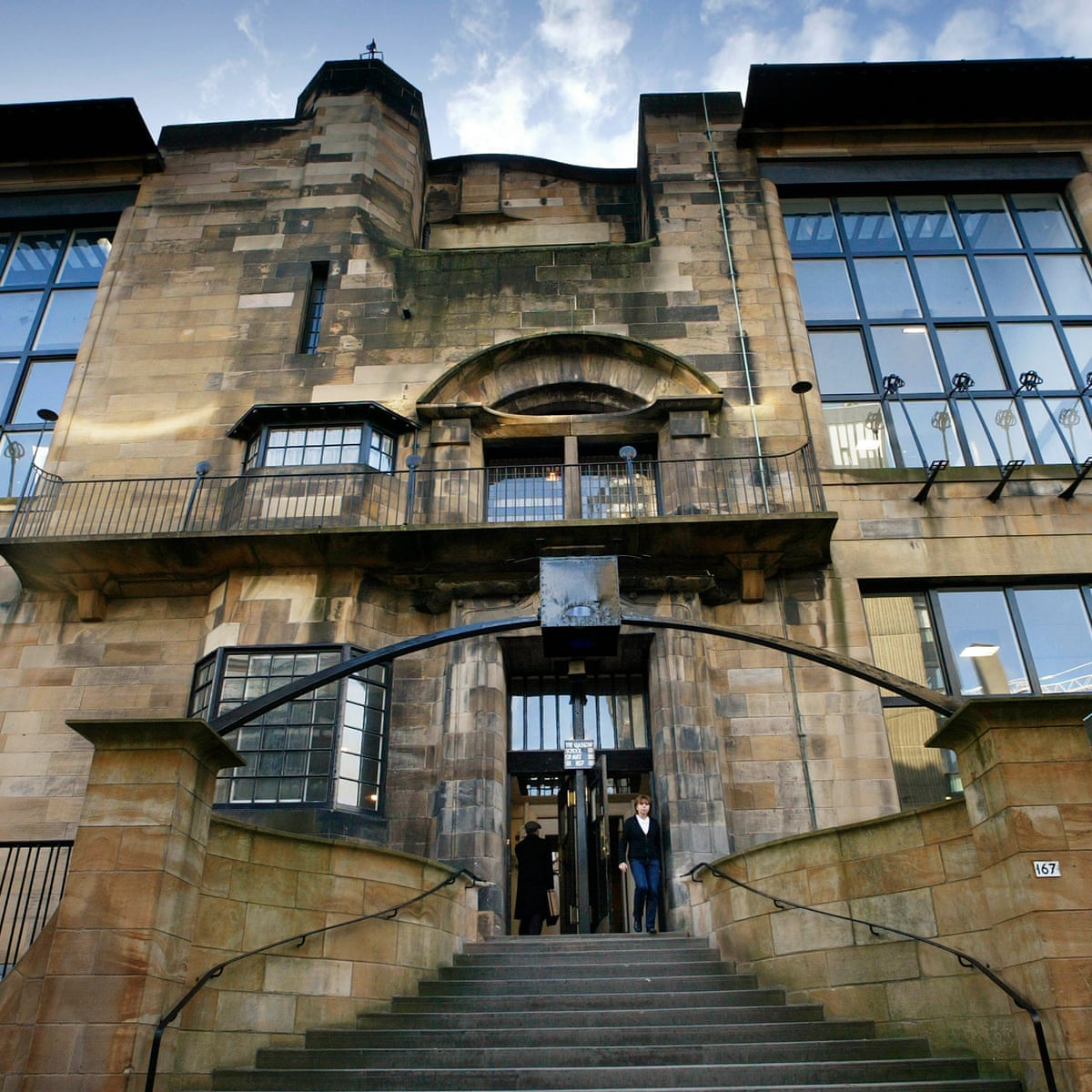
Forty-four years ago this month, I was really getting settled in to my new life as a student at the wonderful Glasgow School of Art, and I loved every minute of it. Each day was busy and brought something new. Through the week I would welcome each day with an early start making my way into the first year department in Blythswood Square. Wednesday mornings were "Liberal Studies and The History of Art" lectures in the basement Lecture Theatre in the "Mack" (Charles Rennie Mackintosh's masterpiece of modern architecture and a creative fortress perched high above Sauchiehall Street, on Garnethill). As the weeks went by I stopped pinching myself as the reality became clear that I was indeed part of my long held dream of being an art student living in the urban world. But I also began to understand that it was not in my character to become anonymous and I quickly gave up trying. Each morning between 7.30am and 8.30am one would see the same group of people travelling in the same direction. A polite nod of acknowlegment then progressed into gentle conversation and fellow commuters became a community. The weekends brought the fun of finding a party, people would actually go round the streets of the West End of Glasgow, listening out for a good party. Most did just this and eventually found occasion to organise their own events in their own places. But in November 1979 I hadn't yet discovered my own talent for hosting what were later to be known as "Special Art School Parties", with good food, plenty of drink and often live music! The old flat that was to be my home throughout my time in Glasgow, did come into its own and was indeed a great place to entertain. It was certainly became a very happy residence and place of work for almost four decades. 

In November 1979, my older brother Malcolm and I received an invitation to two parties in Edinburgh, to be held in the same weekend. We may call them "Stornoway Parties", organised by some of our good friends from home, then studying in the capital. This meant getting a train in the late afternoon on the Friday and making a whole weekend visit returning some time on the following Sunday afternoon. 

We met up with our friends and went back to their flat where we would be staying. Then off we all went to the first party. Very soon after entering the party flat my brother, just disappeared! I spent some time searching for him, and asking if anyone had seen him, but no-one had. Not knowing what to do next, I decided to take my coat off and try to stop worrying. Everyone was leaving their coats and jackets in a bedroom at the back of the flat. I was just about to do the same when I noticed my brother lying face down, choking among the coats and jackets, in the throes of an asthmatic attack! I had to quickly help him get his inhaler and reach for some air. All the time playing down any anxiety I had about the potential seriousness of the event. Fortumately everything was fine and we were soon right back in party mode. But I learnt how easy things can go wrong!

The following day we met lots more people we knew, form Stornoway and in the evening attended another party. By Sunday morning we were all exhausted and quite "partied out". Later on the Sunday we were ready to head "home" to Glasgow. Of course being November it was dark and cold. We arrived back in Queen Street Station some time after 6pm. We climbed up to the Cathedral Street viaduct above the station and there waited for a bus to take us to the West End.

Standing at the bus stop beside us was a wee Glesga wuman. Her head was covered by a well pined woolly hat and she was wearing one of those heavy woven coats quintessentially Glaswegian, with three big buttons at the front. She also wore fur lined boots rolled down and carried a double loop handled shopping back. Now in Glasgow, my adopted city a place I love dearly, no matter where you go, there is always a person desperate to communicate and break through the barrier of loneliness. All the encouragement required is a fleeting eye contact and a conversation will begin. I blinked and the little woman smiled and said, "aye, that's me since yest'rday"... I didn't quite catch it so she said it again! I wondered what on earth it meant and if she had any more such expressive phrases. Within seconds I knew her name was Sadie and was being told her life's history, how she had been working since the day before and was now heading home. She had a family of nine and was very proud of them... The bus arrived we got on, Sadie sat beside me and her conversation continued. Now and then she invited information of me...Then we arrived at our stop in University Avenue, we said our cheerios and my brother and I got off, to walk the short distance "home". Not nearly as chatty as me, Malcolm asked "You never introduced me to your friend? How long have you known her?" I tried to explain, why I was so interested in this person whom I may never have met again and why I believed and still believe that it is so important to engage with and respect everyone we meet. That was after all a value expressed of our upbringing. Meeting a real person, with an interesting life for a few brief minutes brought a special warmth to a cold night and completed a lovely weekend. I never did see Sadie again.    

Tuesday, 17 October 2023

Remembering my first actual class

I continue the journey that my memory has taken us on, right back to the autumn of 1979 and to the First Year Department. At the time, this was located in two former town houses, fronting to 6 and 7 Blythswood Square, and backing to Bath Street, with Bath Lane in between. The two Georgian double fronted houses of the 1820s were connected by bridges spanning the lane. This opened onto Blythswood Street which was once called Mains Street. The official entrance to our First Year Department was the door at 7 Blythswood Square. These buildings had once been the location of the West of Scotland Agricultural College, a fact that was proudly proclaimed in a tile and mosaic on the floor immediately inside the heavy front door.

The address was of historic interest as having been the home of James Smith, a wealthy architect, his wife, family and notorious daughter Miss Madeleine Smith. She became infamous for poisoning her lover with a huge amount of arsenic. Miss Smith thus scandalised the sensitivities of Glasgow society of the 1850's, with details of her clandestine love making and callousness, then walking away from a possible death sentence by a Not Proven verdict. The story is legendary and has been well recorded in many books, plays and films. The actual site of the crime where Madeleine administered the eighty-four grains of arsenic in cocoa to her Channel Island lover Pierre Emile L'Angelier had become one of the male toilets, in the basement with a window to Blythswood Street. Some tourists and sight-seers would wait patiently to be taken to see the location. But clearly the configuration of the building had greatly altered over the years.      

I will always remember my first actual class at the First Year Department of the Glasgow School of Art. Our year was divided into six groups. My group started with a Three Dimensional study in spatial awareness. There were three areas of study, which covered every aspect aspect of art and design. Two Dimensional Work (which covered a huge brief focusing on Design and Composition in two dimensions) ; Three Dimensional Work (which focused on everything in the third dimension, including exploration of spatial awareness; and Drawing, which of course also covered painting. There was also "Liberal Studies", which covered the History of Art and the compulsory Life Drawing each evening of the week, except Friday. We were required to complete one area of study per term, which was continuously assessed, and at the end of the year we submitted work projects and folios which were formally marked. So early on that first day of actual work we were taken to a studio on the "ground floor level" of the Bath Street section overlooking Blythswood Street. The room was large and bright. There was a grid marked off on the floor and rising up the walls. Into and onto the grid were an assortment of items, placed haphazardly. Each student was then given the co-ordinate of a cubic measure of space in the grid and the study enquiry was to remake the shape of that cubic space using different materials, twice the size of the original!  My cube was filled by a plastic sack of unfired chopped clay. I had to think of the true shape, construction, texture... Then I had to reconstruct it using prescribed materials, for example clay had to be replaced by balsa wood. It was certainly an interesting brain teaser to begin life as an art student.

The day ended in a top lit attic studio and here we all began our compulsory life drawing classes, which became a long term commitment for me, throughout art school.

Every Wednesday we had "Liberal Studies". Our tutors in the Blythswood building had a day off. One of my two personal tutors went every Wednesday morning to have her hair done at Gerralts, at Woodside Place, Charing Cross. There she had the front and top beautifully coiffured but the back was always ignored and seemed to be left as the tangled mass that it was. Meanwhile, we all reported to the main building, the world famous 167 Renfrew Street, Charles Rennie Mackintosh's outstanding masterpiece. As in the previous week we ascended the flight of steps and swung through the front doors, which I noticed were complimentarily hinged to allow an uninterrupted progress if carrying a port-folio or large painting. Every inch of this wonderful building was designed to be beautiful and functional, while always inspiring and encouraging to the creative people using it. This time it was the west wing we would be exploring. Our lectures were presented by different lecturers each with a specialist knowledge. We had already been to the Mackintosh Lecture Theatre, in the west basement and were to get to know the space very well.

I have always felt that I was initially attracted to Glasgow first by the wit and humour of its friendly people and then by the amazing architectural internal space that was The Glasgow School of Art Library. This space has always been regarded as the very pinnacle of Mackintosh's achievements. Its three tall oriel windows designed so cleverly as twenty-five foot hexagonal prisms that absorbed maximum daylight from the west and lit three levels of that magnificent interior: the library, the gallery and original book store. This had already become my most favourite space, and well before my arrival and enrollment, I had imagined myself there using it. When I surprised myself and became a student, I was a little disappointed not be able to visit whenever I wished. Access was actually by appointment and one was chaperoned there by a librarian. It was a special sanctuary, a peaceful place to think, reflect and be inspired. Located on the first floor, it closed the west corridor which linked it to the museum at the top of the central stair. The tall west corridors were each lit by three south facing windows, those on the first floor leading to the Library had alcove window seats, originally intended for tutorial purposes. Access around the building was excellent, with each level of both east and west wings being served by a seperate designated dog legged stair, functioning as a stair tower.

This inspiring building just sat so comfortably in that grid on the hills of Central Glasgow. Indeed what would the city be like without the Mackintosh School of Art? It has been perched up there on Garnethill for a creative century, looking like a Scottish medieval castle when viewed from below in Sauchiehall Street and a factory of inspiration when approached from up there in Renfrew Street. I live in the hope that it will rise from the ashes of the fires of 2014 and 2018. Much of the interior of the Library was recreated after the first fire by very talented and skilled crafts people. Some of it was not yet installed at the time of the 2018 fire, and it would be marvelous to see this work installed, in a rebuild. It was a great privilege to have been able to grow creatively there in the original and acquire magical memories which I now enjoy recalling.                

Friday, 22 September 2023

More memories of first days at Glasgow School of Art

Well I am delighted that so many people enjoyed what I posted yesterday. Some really liked the journey my memory took us on, and even wished to carry on further. What was to become a daily ritual for those us after surviving that enrollment day. Climbing up those curved steps and then through the swing doors to be presented in a magical space of light and dark which was The Entrance Hall. As I explained in the earlier piece the stairwell beckoned one upwards, from here, to the light. The interior of this internationally renowned icon of modern architecture and design by Charles Rennie Mackintosh displays master strokes of his sheer genius. Just wandering around inspired ideas and creative thoughts. Back in 1979 I was simply delighted to have got a place there. Indeed I was very pleased with myself, possibly too pleased and certainly in need of being brought back to earth. Actually being there at all was very special and a privilege. Thank you Ms Queenie Rowan for reminding me of my heritage and bringing me back albeit quivering...

Above in the top lit Museum space, roof lights set into the oak beams and trusses filled the place with autumnal morning brightness. Here I met my fellow students for the first time and made lasting friendships. We required to report to a studio in the "east wing corridor", I think it was the central one number thirty-nine. More ebonised oak swing doors, with feature stained glass and lead panels, to go through. This corridor was also lit from above with four distinctive ogee-shaped ceiling lights. Into the big studio dramatically illuminated by one of the huge north facade windows for the specific function of creating art, especially painting. The whole north side of the first floor was the home of the Drawing and Painting Department and at that time it was starting to expand and spread throughout the building. In time I would come to know the place very well, as I became a drawing and painting student for my three specialising years.

On that memorable day we were each given a list and a black bin liner full of the basic or essential kit of materials to begin work as a Glasgow School of Art student. That in itself was exciting and our account with the "School Shop" was then opened. I looked forward to visiting what turned out to be a characteristically eccentric emporium run by two colourful middle-aged wig wearing Jewish women, whom we all eventually got to know..

An eventful morning was brought to a close when someone made the welcome suggestion of going for lunch and we ended up down the hill in Sauchiehall Street. The world was then our oyster. It was almost too much to take in and each of us was rather thrilled.

The following day we required to report to The First Year Department, actually housed in two former town houses, fronting to 6 and 7 Blythswood Square, and backing to Bath Street. Here we were divided into six groups. The Fresh student whom I met on the stair the day before was in my group as was a familiar face from Lewis, my dear friend Maggie. I was in my element.

At about this time we were all invited to The Director's Welcome Address to the new intake of first year students. Back up Garnethill to the Mackintosh Building, 167 Renfrew Street. This time we descended the stair into the West basement corridor and to the Mackintosh Lecture Theatre for the first time. The seats here were uncomfortable by design, so no chance of nodding off at any stage. The desk or book rest behind was at the very height to cut right into one's back and the seat hard and uncompromising. At some point years later the seats were covered but it did little to make them any more comfortable.

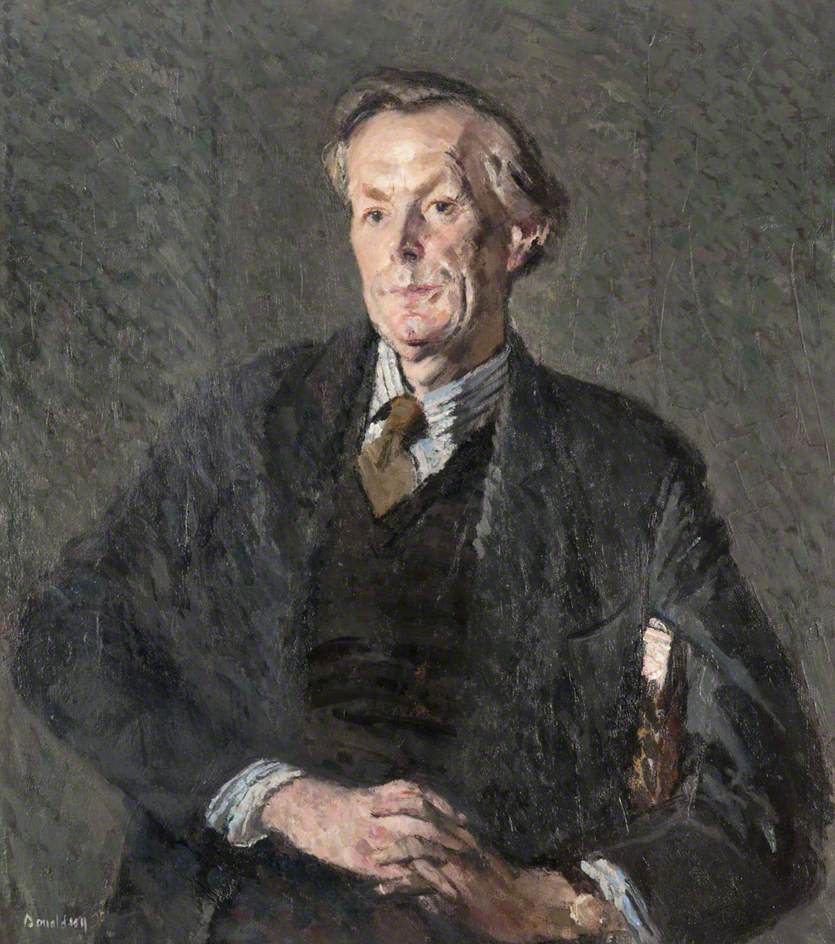
The Director of Glasgow School of Art at this time was Sir Harry Barnes, he had been a well known and highly respected designer. I had heard about him before arriving as a student. Sir Harry Barnes, lived in large Victorian Gothic Mansion in the prestigious Whittingham Drive, in the West End, called "Dumpy Dykes", it overlooked Binghams Pond. I well remember his kind address and warm welcome to all of us. First of all his entrance was unusual, as he was carried from his wheelchair and lifted by two carers up onto one of the tree curved desks that stood on the platform or stage. Clearly a very ill and frail man. He gently expressed his good wishes and hoped we would enjoy our studies at such a wonderful place of creativity and every possible success in our future careers. Everyone was touched and most impressed by this great dignity. It actually turned out to be his last ever engagement as sadly he passed away very shortly after he spoke to us... I believe he had cancer of the spine. We were all very sad.


Sir Harry Jefferson Barnes, picture courtesy GSA

Thursday, 21 September 2023

First Day at Art School

It is exactly forty-four years ago today, the 21st September 1979 that I enrolled in the Glasgow School of Art. Thus fulfilling a long held ambition. I was tingling with excitement, every few minutes pinching myself just to make sure it was a reality A few days before I had left Stornoway with my Dad, in a white transit van, the second or third such trip. In the previous weeks my parents accompanied me with that van full of my belongings, mostly the usual clothes, but vitally art history books, various drawing and painting materials, my old wooden desk and work table, which have remained with me all these years. These items were being moved to my new residence, a once grand Victorian tenement flat in the heart of the West End of Glasgow. My parents had bought the property the month before to ensure my older brother and I had adequate accommodation whilst we were students. We were finding it very difficult to find a place to stay and I was not actually allocated a room in the J D Kelly Hall until well after the term began. For a variety of reasons our family were also spending an increasing amount of time in the city and the old place would be very well used over the years (but that is another story, for another day).

Back then all I wanted was to explore my urban being and find anonymity, far away from the curtain chinking of home. I was a proud teenager who did not want it known what I was doing however harmless and dull it really was. At that time I was far from sentimental for my true homeland and it would take a number of years to be overwhelmed by the pain of "cianalas", which I certainly came to know in later years. But still, on that departure I stood on deck watching our Island recede into the horizon.

So here I was on my way to a new life, the journey to Glasgow was not without incident. As we came down through the gorge at Glen Coe, my father very calmly told me "Kenneth, I don't wish to alarm you but my breaks aren't working properly, I'll pull over at the next garage, and get them attended to!...". Well that was not until we hit the urban world, somewhere on Great Western Road. He managed to control the speed with skilled use of gears and careful attention of all other road users. Such was my confidence in my Dad's driving, I really did not think anything of this situation, until many years later when I heard him tell of how he felt on that journey. Of course he never let on how scared he actually was at the time. True to his form he found the garage he had in his mind and clearly knew them, or used his incredible charm to get help. He needed the van to collect a few things over the next few days before heading home.

I seem to remember my older brother was at the flat to welcome us and we went out for a meal. Over the next few days I enjoyed finding my way around and getting my bearings, it did not take long for me to feel very much part of my new surroundings.

I was up and out bright and early on the morning of the 21st September, so excited as not to miss a single detail. I reached 167 Renfrew Street, and ascended the iconic curving steps to the famous swing doors in the portal. Then I entered through the small vestibule, into the vaulted entrance hall. Though painted in off white hues the hall is dark but the beautiful light streaming down the the stairwell certainly entices visitors further into this building of art, design and creativity. I now find it impossible to believe that all this has been destroyed by fire twice. At the foot of the stair the janitor's box seemed the centre of all proceedings and knowledge and I was directed to the right-hand door, on the half landing, The Registrar's Secretary and Assistant, one Queenie Rowan's Office. This room was a hive of industry, as ALL the first year students arrived at an allotted time, that day, to enrol and matriculate. It was also buzzing with a flock of women each in awe of Ms Rowan, their reverence and near fear of the grand lady was contagious and filled the room. I wanted to get in and out as quickly as possible, so when the lady herself called my name all I wanted to do was be swallowed by the floor and disappear. What on earth had I done to be thus summoned? In her refined West of Scotland accented she announced, "Mr Burns, I wish say to you, please never lose your fine Hebridean accent, it is a special attribute and qualification that will serve you well throughout your life," Then she smiled at me and finished by saying. "That was all I wanted you to know". With that I left her office and continued up to the first floor space known as the Museum. To get photographed and receive a matriculation card, produced by a new technique - called lamination. My card had a blue spot with a figure 7%. Later when I asked what it meant I was told that this referred to the fact that I was what they then called a "Seven percent-er", indicating that I was one of only 7% of GSA students who gained entry there without the minimum qualifications or on the strength of their portfolios.

I had spent the summer cultivating some facial hair, which possibly made me look older. Though I hoped more sophisticated! As I wandered around a fellow first day, first year student, thinking I was a tutor stopped me to ask ..."I wonder if you tell me, Sir, where do I go now?...To which I had to own up to being in the same position, merely a fresh student. We laughed and became good friends.

This was the beginning of a wonderful and creative journey. Over the next four decades I met many people and made lasting friendships. Charles Rennie Mackintosh's masterpiece, the building we came to know and love as "The Mack", became my alma mater. I discovered a new detail every day I spent there. It now live on in our memories.

Monday, 17 July 2023

Visit to Glasgow - June 2023

Well, speaking for myself, I feel, the fourth dimension time, seems to just race through our lives, usually leaving us rather disoriented. I often wish we could reduce the pace at which we seem to be propelled through this life. That coupled with the busy "full-on-energized" activity everyone exudes, makes me, for one, dislike the modern way of being. I know so many people whom I believe are sadly deluded in thinking that being busy is productive, and that they have such busy lives and therefore unable to engage in the humanity of making normal communication and conversation. The Pandemic seemed to distort the values of our delicate society. I miss the pace of life in days of old. This is just one aspect of the progression of age that challenges our enjoyment of the maturity of the whole aging process. For so many reasons growing older can be a sad experience, but we are cushioned by the acquisition of wisdom.. Over recent months more valued friends have passed away and it is simply impossible not to feel overwhelmed by this great sadness....we must therefore continue to find and retain the strength we need from our faith.

The past couple of months seem to have simply flown by. The last time I posted here was in response to my sixty-second birthday, on 6th May. Since then I have spent time back out in my garden in order to reflect on the general presentation of life and work. The B&B Season had begun briskly, and I was fortunate enough to find a gap week at the start of June to get "off Island". I headed back to the urban world. I had a brilliant week in Glasgow, reconnecting with so much in such a brief time. A week is never long enough. But even time in my adopted city is now shrouded in extreme grief and loss of dear family and friends.

Now I feel it is vital to cram every moment off island with a power pack of activities that leave me the return home recuperating, hey ho.

Friday 2nd June a mad cap race to catch the lunchtime ferry and then relaxing the whole voyage in the good company of friends. Thank you...Ross Munro and Mary MacAulay.

I stayed with my nephew Liam and his wife Sneha, the following morning walking in the Glasgow sunshine through The Gairbraid Estate, Dawsholm and Maryhill Parks to The Western Necropolis to view my Dear Sister-in-Law Lorna's head stone and place flowers.

In the evening I went to the Roger Waters concert in the Hydro Stadium. Having got two tickets from a friend in Storoway, was unable to convince members of my family to join me. That was my first visit to the Hydro, and I was most impressed. Wondering why I hadn't been when I was a citizen.

Glasgow is a special place for me in so many ways and Glasgow in June my favourite time of all. I loved being a student at the GSA, then being involved with the West End Festival and it's Carnival. Making those huge costumes through the non-dark nights and walking home absolutely exhausted, are my memories of June in Glasgow.

As ever I keep a visual Journal. Sunday 4th June was hot from the start. Glasgow can get very hot, in summer. After breakfast I ambled off down the Switchback, crossed the Forth and Clyde Canal at Temple Lock and on to Anniesland via Crow Road and Morrison's Store. Then out into Great Western Road. Here I noticed a Turkish Barber and and treated myself to a pampering. Including an eye watering nostril hot waxing...Beauty standing pinching...och!

Then I did some drawing along the road at Binghams Pond.

Monday 5th June, I went for a most nostalgic walk through the West End, through the day and met friends Rachel Guthrie and Jim Mackechnie in the evening.

Tuesday 6th June, I went into "Down Town" Glasgow, still my favourite architectural set-piece. I met up with my sister-in-law Susan at John Smith house, the Unite Office, in West Regent Street, where we attended a special meeting of The Scottish Cuba Solidarity Campaign. The speaker was the Ambassador of Cuba. After the meeting I went back to Susan's new flat and we went for a wonderful Italian meal to Bella Vita, in Mosspark Boulevard.

Wednesday 7th June, I met up with my friend John Cunningham, who came up to Byres Road, from Ayr. I enjoyed the afternoon showing John round my old haunts and adopted home of Hillhead. For four years from May 1999 to May 2003, I was the Glasgow City Labour Councillor for the Ward. I got to know ever inch of the place, which was more like a town within the city.

Thursday 8th June, it was time to travel home to Stornoway. My nephew gave a lift to the bus station. All seemed well but then there was an alleged bomb threat with a suspicious suitcase being left in the very centre of the bus station. The place had to be evacuated, which caused a delay. In situations like that we just have to remain calm and patiently wait. We made the necessary connections and, that evening, I had a pleasant ferry journey in the company of Alison and John Cunningham. I have known Alison since we were children. Its seems that I know a few John Cunninghams, each are very much one off characters.

I really enjoyed my trip off the island and currently have no idea when I will get away again. But this weekend I had a lovely visit from my sister-in-Law Susan, and look forward to various other members of the family visiting.

June was a warm month and I kept myself active out in my garden, almost every day. It is very much a project in progress. When it does reach a level of completion I intend to hold a special party.

This July has been a very wet month, But our gardens and rivers needed hydration.

Today the 17th of July would been my dear mother's 86th birthday, so I will be thinking of her and doing something special to mark it.

KB 17 July 2023.

Sunday, 7 May 2023

My sixty-second birthday weekend

THANK YOU FOR THE KIND BIRTHDAY THOUGHTS AND MESSAGES

Wow, I'm overwhelmed in beautiful way I never felt possible...but then everything is possible when there is friendship in the world and kind words express well wishes of happiness. I would like to thank all of you, who took time to send me such lovely birthday wishes. You certainly cheered this old chap and for that thanking you ALL cannot be enough. Having such special friends for support is awesome and wonderful.

Yesterday, Saturday, 6th May 2023 was among other things my Sixty-second birthday. Of course there was clearly a lot going on... The King's Coronation was being broadcast live... Then amongst it all I noticed that a good friend of mine was delighted to announce the birth of a grandson, such good news is heartwarming and happy.

Now with all the preparation for my summer season requiring my deplete energy of late. I was rather tired and thought I'd have a leisurely sort of day. To follow, the annual emotional juxtaposition of my Dad's Anniversary, a significant one this year and very poignant. Now, being as it was a Saturday. First thing was to get the weekend food shopping done and dusted quickly. Regardless, I had actually decided to go out for a meal, nothing fancy and not to extravagant, We went to the Crown Inn's, Harbour View, with it's fine food and equally fine location. I meet so many people I know friends from school, cousins I haven't seen for a couple of months., and so many others. Earlier I had a lovely phone call from a nephew in Glasgow and later a wee video by my youngest nephew, aged seven, to serenade me on his violin from Portugal. I loved being out in company but then was getting more tired by the minute.

When I got home there were many messages and I have enjoyed reading each of them. I will also be spending time to give each a special reply. XXX KB

Friday, 5 May 2023

In memoriam of my father

Exactly thirty years ago, this morning, at 10.30am, on Wednesday 5th May 1993, our father Willie Burns, was suddenly taken away. Leaving us stunned and shaken. It was a bright,cloudless spring morning and what should have been a routine mid-week working day will forever be remembered as the moment our world came crashing down.

He was only sixty and a half, very active and in the middle a repair job in his workshop... when he collapsed without warning, suffering a massive heart attack. He died within the hour in the Western Isles Hospital. We still grieve and miss him so... He still had much to give. It will always hurt and I will always find it virtually impossible to think of thirty years without him or imagining him having grown old.

Time, did as it always does, left our loved one back in the moment when he past. Time, it does not soften, it does not heal, it merely takes us further away from that terrible moment of loss.

This a time to remember a very special person and reflect. He was a positive man and would prefer to be remembered in a happy positive and constructive way. So as every year I steal a few silent minutes on my own... and then get on with the chores of the day.

In quiet reflection of William Burns, Marine Engineer, 3rd November 1932 - 5th May 1993.

KB

Monday, 1 May 2023

In memory of my great-aunt, Peggy Ann

Yes indeed this is a profoundly sad story. It needed to be told at this time a century on. It is a vital part of my maternal grandfather's family history, it was told to me when I was a child, by my Dear Mother. I have since researched and gathered more information on that history.

Today, 1st May, would have been Peggy Ann's birthday.

Sadly the nature of history is retrospective and the individuals it relates to are often no longer around to tell or respond to what we might wish to know. It is also important, while studying, interpreting and transcribing to use factual information and not conjecture. But by all accounts the loss of these two sisters Mary and Margaret ("Peggy") Ann, in their twenties, at 1 Dalbeg, in 1923, had an understandably devastating effect on their siblings. Four brothers John Angus, Murdo, Kenneth and John, and two sisters Dolina and Catriona. Their sisters who died so young were fondly remembered and the memories were passed on throughout the years. I learnt of this sad story as a young child, from my own Dear Mother Barbara, who had been told of it by her father Kenneth, who died when she was ten years old.

Now the naming of children has always been important, especially as a way of commemorating relatives. It is my understanding that in island communities there is an established custom of naming children after or in honour of recently lost close relatives, (I do know that my grandfather, who I am proud to be named in honour of, was indeed named after his uncle Kenneth who died aged twenty-eight years in1892). I have been told that my grandfather Kenneth MacLeod and my granny Barbara MacNair, made it known that he wished his eldest daughters my twin aunties to be named Mary and Peggy, directly in honour of his young sisters. Eldest brother John Angus and his wife Jessie Nicolson's family were a little older. Murdo had no family. But it does become evident that the others also wished to name daughters in honour of their two sisters. John and his wife Mary Murray's , eldest daughter was born in 1923, and named Peggy Ann and his youngest daughter was named Mary. The youngest sister Catriona "Codaidh" and her husband Malcolm MacArthur named their eldest daughter Peggy Ann, and younger daughter Mary.

I knew Auntie Codaidh, she was exactly the same age as my granny Barbara, they had been close friends since early childhood and gone to the Shawbost Primary School. She would visit us and we would often visit her in her home in Upper Carloway and latterly when she moved to Stornoway, before she passed away in 1989. She loved to reminisce and had clear memories of her lost sisters, whom she did speak of quite often. She also had a good knowledge of the history of the family, going back many generations. One day when we were visiting she actually wrote out the precise dates of birth of all her siblings. My mother gave this list to me before she passed away, and it is now a much valued item.

Dolina, and her husband Murdo MacIver, did name their eldest daughter Mary , though not necessarily after the lost sister Mary as there were paternal grannies and great-grannies named Mary. Their, second daughter, was Catherine Margaret Ann, who sadly passed away only very recently. I do not believe that I am in a position to say, others may certainly know better than me, if her last two Christian names were in honour of the other lost sister Margaret Ann.

Catherine Margaret Ann and my mum Barbara, were first cousins, and the family connection was very strong and lovingly kept. In all there were twenty first cousins, fourteen girls and six boys, none of whom knew the two aunties who passed away so tragically in 1923. I was brought up to know the connections and keep them going. Then as I got older I became increasingly more interested in the history of the family and have over the years made quite an extensive and on going research. I wanted to tell the story of those two girls who died in Dalbeg, a century ago, before every vestige of them goes without trace. This is a good time to tell it.

KB.

Wednesday, 26 April 2023

The SS Metagama Also Came Back

We have been commemorating the centenary of that most historic day, 21st April 1923, when the SS Metagama, the huge liner which came to take 260 mostly young men and women away from their homes in Lewis. 

I have been thinking and reflecting on what it must have been really like for our community of that time still struggling to come to terms with the tragic impact of the losses and effects of The Great War and HMY Iolaire

There would, no doubt, have been a great amount of excitement and anticipation amongst the young people embarking on such a new future, and an equal amount of sadness and sense of loss amongst those they were leaving behind. There would also have been a tender understanding by the older generations of the oppertunity that might be offered by such a departure. Every emotion of migration would have been expressed. An event of such a scale would have had a huge and imediate impact on the community, the effects of which could only be long lasting. I have been thinking and reflecting on its effects on that community and indeed on my own family and relatives. Through some research a very sad and poignant story was revealed and I would now like to tell it.

SS Metagama did not just sail from Scotland to Canada. She also made return voyages across the Atlantic. On the 3rd June 1922, my great-aunt, Mary Rennick (nee) MacLeod, departed Montreal in Canada on board the SS Metagama. She was the sister of my maternal grandfather Kenneth Macleod. Mary was headed back to Scotland to visit her family, but would never return to Canada. On 31st December 1923, she passed away at 1 Dalbeg.

Mary was born on 10th June 1896 at 50 North Shawbost, the eldest daughter of Malcolm MacLeod (Calum, Dhòmhnall, 'ic Mhurchaid / Buicean) and Kennethina Murray (Ceanag, Aonghais, Choinnich, Aonghais Gobha). After war ended in 1918, Mary met an American serviceman, Private George William Rennick. The pair married on 6th May 1919 in Glasgow. The ceremony was performed at 19 Howard Street, warranted by the Sheriff Substitute of Lanarkshire, in the presence of Police Constable Roderick Smith and domestic servant Effie MacKay. George was a chauffeur in civilian life,the son of Harry Rennick (a fisherman, by then deceased) and Mary. His mother had remarried after his father died, and was by that time Mrs Cooke.

Four months after their wedding, Mary and George left Scotland on 15th September 1919 and arrived at Detroit ten days later. They lived at 1264 Belvedere Avenue, Detroit, for nearly three years. By all accounts, Mary contracted TB and wanted to return to Scotland to visit her family.

Mary applied to the authorities in Washington DC for a new passport. On the application, dated 23rd May 1922, she declared that she was going abroad temporarily and would return within two years. The photograph with the passport application, as displayed at the top of this post, shows her looking unwell. It appears that she was suffering from tuberculosis since before leaving North America. 

I copy the description on her passport application:

Age:22
Stature:5 ft 2
Forehead:Low
Eyes:Brown
Nose:Small
Mouth:Small
Chin:Narrow
Hair:Dark brown
Complexion:Light
Face:Small
A small scar between the nostrils.

Mary departed Montreal for Greenock on board SS Metagama on 3rd June 1922. She then returned to Lewis, to be with her family.

All through my life I have heard of the truly sad story of this young relative of mine, whose voyage back home to Lewis could not have been sadder or unlike her peers'. Those young people who were so filled with excitement and expectation, as they gathered, in Stornoway. Then got ready to set off to board the same SS Metagama to cross the Atlantic to Canada. That day exactly one century ago. By contrast, Mary’s story was very different.

As I researched her short life, it became clear that her experience in North America was far from a happy one. That return home, on her own, to her family, would be marked by tradgedy and grief. Both Mary and a younger sister Margaret Ann (“Maggie Ann”or “Peggi Ann”) were ill with TB. Their illnesses were apparently, unconnected and contracted at different times. Then for nearly a year the sisters nursed each other at their family home, at 1 Dalbeg. At that time people referred to the extremely moving and sad scene of the two beautiful sisters caring for each other there. The family had moved from North Shawbost, early in 1922, it was evidently not to be a happy home. Maggie Ann passed away on 11th May 1923, she was twenty-one years old. Mary passed away seven months later on 31st December 1923, she was twenty-seven years old.

In the next decades, Mary and Margaret Ann’s brothers and sisters married and raised a family. In each family that followed, the first two daughters were named in remembrance of the tragic sisters who died in 1923.

Sunday, 12 March 2023

My parents' 65th wedding anniversary

Today, 12th March 2023, would have been our parents', 65th wedding anniversary. This photograph was taken at the reception held in the Royal Hotel, in Stornoway and captures the very moment when they happily cut the wedding cake. Earlier that afternoon their wedding service took place in St Columba's (Old Parish) Church Stornoway .

My mother Barbara, often told us how our father Willie and his two brothers had to clear snow and ice from the steps and entrance of the church, that morning.

Saturday, 11 March 2023

P1 at Sandwickhill

The other day I was trying to do a bit of sorting out and spring cleaning, when I came across some old class photographs. Here is my P1 "Infant" class, at Sandwickhill Primary School, c May 1966. At that time there were two separate intakes each year. Depending on a child's birth day, they started school either after the Easter/Spring holiday or after the Summer holiday. I believe the two yearly intakes were combined after the Summer holiday to create a class of pupils of similar age. This was the height of the "baby boom" class sizes were large then and the concept of composite classes and combined facilities was a necessity.

This photograph brought back so many memories for me and I thought I would share it. I am happy to say I know and remember everyone in this picture, and can even name them all. I now look forward to seeing the response, memories and comments.

Saturday, 4 March 2023

4th March 2023

Well it has been a couple of months since I last expressed my thoughts and feelings here. A couple of cold, dark and wet months of a winter that is now moving behind us and making way for the time of reviving and renewal, with longer and brighter days, we welcome Spring. Sun at dawn to break our day. There can be nothing quite like sunshine in the morning to lift the spirit and encourage us to remember the wonder of nature and joy of living. Indeed we must catch these moments of brightness and savour them as they arise. There is so much benefit to be gained to our health and well being simply walking in the sun shine. This is sadly often lacking in our part of the world where our climate results in winters that seem to stretch and linger, such days are dark and dull. I believe this does contribute to our outlook and approach to life. We become focused on our climate and the weather. It's adversity dominates and dictates what and how we do things. We become preoccupied with defending against the prevailing wind and rain. Of course inevitably becoming the prime topic of our conversation. Now, I remember when I lived in Italy, back in those halcyon days after art school, there every day was reliably warm and dry. Meaning, simple things like deciding what to wear, each day, was easy, as each day was predictably good and pleasant. It never ceases to amaze me that when the weather is always good, with little or no variation, no-one needs to make any reference to the climatic conditions. People do not comment on the condition of the weather and other forms of ice breaking chat get deployed. I certainly loved my time there, and would go back in an instant. But I know I occasionally yearned for dramatic variation in the clear blue of the sky or warm dryness of each day.

The cheering aspect of a simple sunny day must never be underestimated, it is such a fundamental element of our lives and vital when we are presented with the sadness that constantly seems to follow us all as we progress in years. I am looking forward to the Spring and hoping that there will be some settled climatic conditions, to actually get back out in my garden and watch the wonder of nature's renewal, regrowth and recovery. What greater gift can there be?...All things bright and beautiful...

A gentle reflection on Saturday 4th March 2023.
KB

Tuesday, 3 January 2023

3rd January 2023

As the 2022 Christmas Holiday now passes and we are looking to and hoping for a better, healthier and happier year ahead, in 2023... I feel my usual yearning for the brighter and more active days of spring. It is driven by a deep passion to get creative again (for me that would be drawing, painting, writing, gardening, cooking, designing, even thinking!). In the positive knowledge that there is an inherent healing to be gained in the natural cycle of living. Soon the sap will be rising in the trees and the leaf buds preparing for capturing the extra sun light. But equally soon, possibly sooner our lives will need to begin the return to the labours and endeavours of so called normality. We need to be optimistic when looking to the future. I know only too well the effort that this entails. As the last couple of years have certainly been a challenge of sadness and loss, for myself and many people for whom I care.

The festive holiday that now passes into it's own history, actually marked the fiftieth that our family has had in this home, in Newton Street, Stornoway. The place is a considerably quieter one now. Our parents thrived on the hospitality of the season, the extra place setting at the table was always filled. There was a constant fire crackling in the hearth and the oven yielded a continuing production of roasts, vegetables and fresh festive baking. There was music, voice and merriment... But, sadly, it no longer heaves with such partying. I well remember these parties and the happy people who enjoyed them through the years. Perhaps, who knows, I might yet regain the energy required to celebrate future anniversaries, events and parties. I also thrive on same hospitality given by my parents.

As I reflect on this festive holiday, I am reminded of another, equally full of hope. On this day six years ago, 3rd January 2017, I left the warmth and comfort of my Dear Mother's home to head back to my Glasgow flat for the last time. There with the help of two of my brother's and nephews, I began the task of finally clearing that old place. It had been my home and studio of work for almost forty years. Just as our parents had in Stornoway, my Glasgow home was one of hospitality. Over the years I held lots of parties and welcomed many guests. The table was served with the same traditional extra setting, it was also always filled. But despite all these years I never actually spent a Christmas Day there, I always returned to sit at that special dinner with my Dear Mother. On my very last day, in that old flat, Friday 20th January 2017, everything and everybody gone, I was left completely on my own. Prior to handing the keys to the estate agent, for the new owner. I quietly stole a most precious moment, to wander through those empty rooms, which seemed so filled with the sound of friendly laughter and familiar voice. As my head cleared, I stepped over the threshold and gently pulled the eight foot door shut, then turned the lock for my last time. One era, with all it's memories had just past, almost symbolically and I was keen to move swiftly on to my next. The following day I returned to Stornoway, this had long been planned and I happily embraced my future. So many aspects have indeed been and continue to be bright and wonderful. Such a thought actually keeps me going...

Here's to the future, here's to 2023.

Reflections of this time of year, Tuesday 3rd January 2023
KB